
Product video effect
Highway Billboard Ad: Your Product on the Roadside
A billboard says the brand is big enough to have one. Upload a single product photograph and the board, the road and the traffic are generated around it.
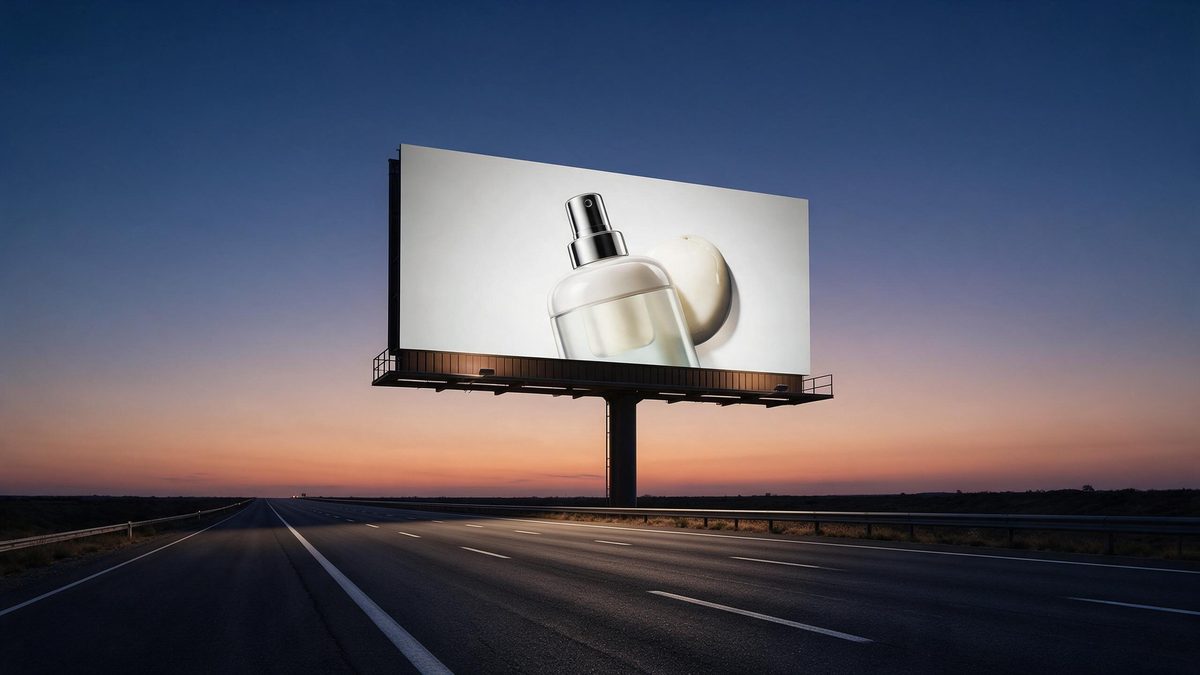
A billboard is a signal before it is a message. Whatever is printed on it, the fact that somebody paid for the board says the brand operates at a certain scale, and that inference lands before the viewer has read anything. It is the cheapest way to borrow authority in a five-second clip, and it is a shot most independent brands could never produce at any price.
This template builds the roadside from one front-facing product photograph. Output is a 5-second 720p clip for 45 credits, in 16:9 only, which suits a listing video, an email header, a landing page or an embedded player. The board and the road are generated together, so occasionally the billboard is never produced, or it ends up blocking the road instead of standing beside it.
Specs at a glance
Straight from the product panel, not from a marketing deck.
- Output
- 5-second video
- Credits
- 45 per run
- Resolution
- 720p
- Aspect ratio
- 16:9
- Input
- 1 photo — a single product
- Best results with
- A clear, front-facing product photo works best.
- Known limits
- Occasionally the billboard is never generated, or it blocks the road.
What it does
Built for this specific job, not a generic editor.
Authority by association
A roadside board implies a brand with a media budget. That inference arrives before anyone reads the product name, which is the useful part. That inference lands before anyone has read the product name. Nothing about the product has to be claimed for it to land.
Landscape, 16:9
Output is 16:9, the shape for a listing video, an email header, a landing page or an embedded player. The frame is composed wide rather than cropped. The width is what makes a roadside shot read as a roadside shot.
One photograph in
The sole input is a clear product photograph, taken front-on. No artwork to resize, no board to rent and no location to scout. The render takes a single subject, which means isolating yours in the shot.
Five seconds, wide frame
The shot resolves inside five seconds and restarts on players that loop, which suits a page header or a screen where the clip runs continuously. A screen left running all day needs exactly that repeatability.
How it works
Four steps, no timeline to learn.
Pick a pack shot
Choose one clear, front-facing product photograph with the item fully in frame on a plain background. The product is what goes on the board, so keep it isolated. Even light helps, since the artwork has to read from a distance.
Open Highway Billboard Ad
Load the effect page on OpenFilmo and supply the product photograph. The board, the road and the traffic are generated in the render. One image is the whole brief, so nothing needs staging beforehand.
Plan a wide placement
Output is 16:9. Decide where it will sit, a listing video, an email header or a page embed, before rendering, so the composition suits the slot. Set the ratio first, because the composition is drawn around it.
Check the board
Run the render for 45 credits and confirm the billboard appears where it should. If it is missing or it blocks the road, run the effect again. Check that the board appears and rerun if it does not.
Where people use it
The jobs this effect actually gets used for.
Landing page headers
A 16:9 clip at the top of a landing page gives a brand an established look, which matters most for a company a visitor has never heard of. Five seconds is enough to set that tone before the copy starts.
Email campaign openers
Movement in the header of an email raises the chance the rest gets read. A roadside shot sets a tone without a large file. Movement in the header raises the chance the rest gets read.
Pitch and investor decks
A clip that shows the product on a board communicates ambition in five seconds, which is useful in a deck full of charts. Ambition is communicated in five seconds, which a chart rarely manages.
Looping screens
Export 16:9 and run it on a screen at an event or in a window, where a wide looping clip reads better than a static banner. A wide looping clip reads better than a printed banner at the same size.
Why a billboard borrows more than it shows
Association, and the two ways the board fails.
Outdoor advertising is the only medium where the cost is the message. Nobody reads a board and concludes that the product must be good; they conclude that somebody spent money, and that conclusion is what the advertiser is actually buying. Transposing that into a five-second clip gives a small brand the same inference for the price of one photograph, and it does it without claiming anything about the product at all.
The 16:9 constraint is a practical one rather than a limitation. Landscape suits the placements where this idea works: a header on a page, an opener in an email, a clip embedded in a listing, a screen running on a loop at an event. Vertical would need cropping and would lose the width that makes a roadside shot read as a roadside shot in the first place. Vertical would lose the width the whole idea depends on.
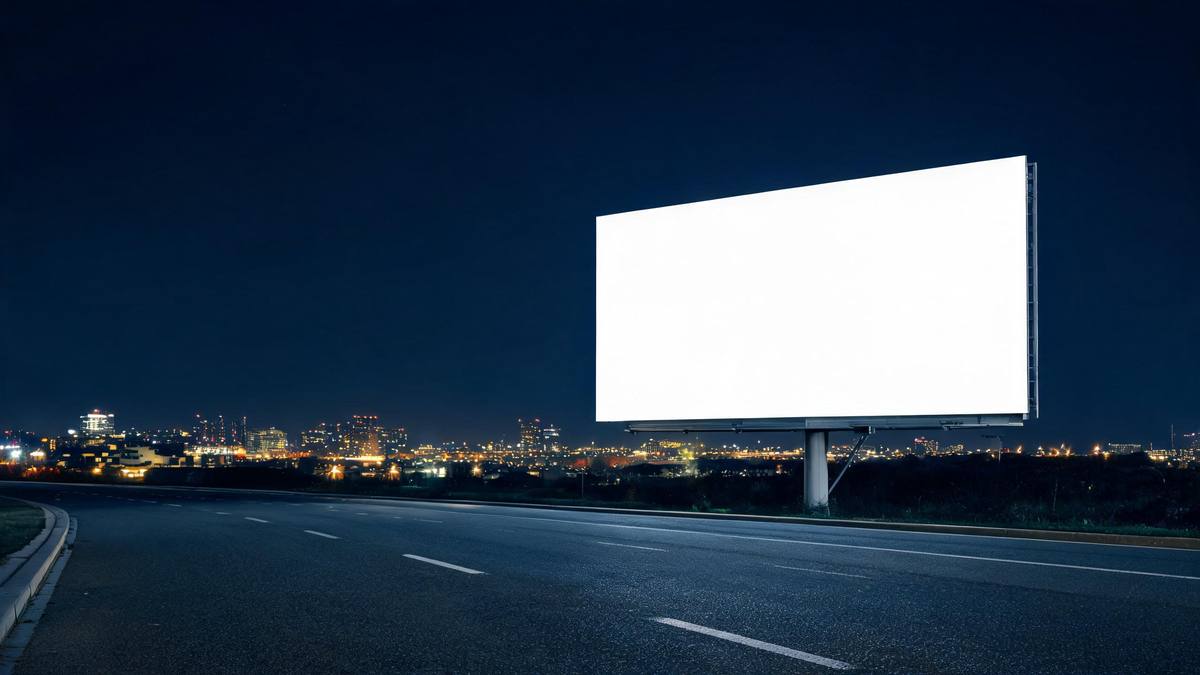
The board itself is the fragile element. Occasionally the billboard is never generated, so you get a road with nothing on it, and sometimes it blocks the road, which looks like a mistake rather than like advertising. Both are obvious in the finished file. Watch the render, run again if either appears, and use a clean front-facing pack shot, since the product is what has to be reproduced on the board.
Credits and plans
Every effect draws on one shared credit balance.
Highway Billboard Ad costs 45 credits per render, above the 30 credits a Free account receives per month, so a single run is not possible on Free. Starter is $9 a month for 400 credits, around eight runs of this effect, and Pro at $19 for 1,000 or Studio at $59 for 4,000 suit a brand refreshing creative across several pages. Effects share one balance and the cost appears before you confirm.
Related guides
Longer reads on the same workflow, from the OpenFilmo blog.
AI Product Video for Ecommerce: What Converts
How to make AI product video that converts: shot types ranked by impact, consistency requirements, and the workflow for generating…
Runway Ads: Autonomous Ad Generation, and What to Verify
Runway Ads claims 1,000% more ad volume at 2x ROAS. What autonomous ad generation does, which claims to trust, and how to test it …
AI Video for Agencies: A Client Delivery Workflow
A client-ready AI video workflow for agencies: scoping honestly, rights clearance, approval gates, revision economics and how to p…
Related effects
Same family of effects, on the same kind of input.
Frequently asked questions
What photo gives the best result?
One clear, front-facing product photograph with the item fully in frame and a plain background. The product is reproduced on the board, so an isolated, evenly lit pack shot transfers far better than a busy lifestyle image. Shoot the product on its own, front-on, in even light.
Why is it 16:9 only?
The effect is designed as a landscape shot, which suits a listing video, an email header, a landing page or an embedded player. The width is what makes the roadside read as a roadside, and a vertical crop would lose it.
What will I receive from a run?
A 5-second 720p clip in 16:9 showing your product on a roadside billboard, generated from one photograph. The board, road and traffic come out of the same render, with no editing step in between. Settle on the frame before starting, as the composition follows it.
Is it available on Free?
No. One render costs 45 credits and Free includes 30 credits per month, so a single run exceeds the allowance. Moving to Starter, $9 for 400 credits, puts around eight renders within reach. Every render, whatever the effect, spends the same pooled credits.
What goes wrong sometimes?
Occasionally the billboard is never generated, leaving an empty roadside, and sometimes it blocks the road instead of standing beside it. Both are visible in the finished clip, so watch it and run the effect again. Both are obvious once you watch the clip, so run it again.