
Style effect
Create a Four-Panel Sticker Video From a Photo
Build a vertical sheet of animated sticker expressions from one person, pet, pair, or person-and-pet photo. The 4-second 720p result costs 100 credits.
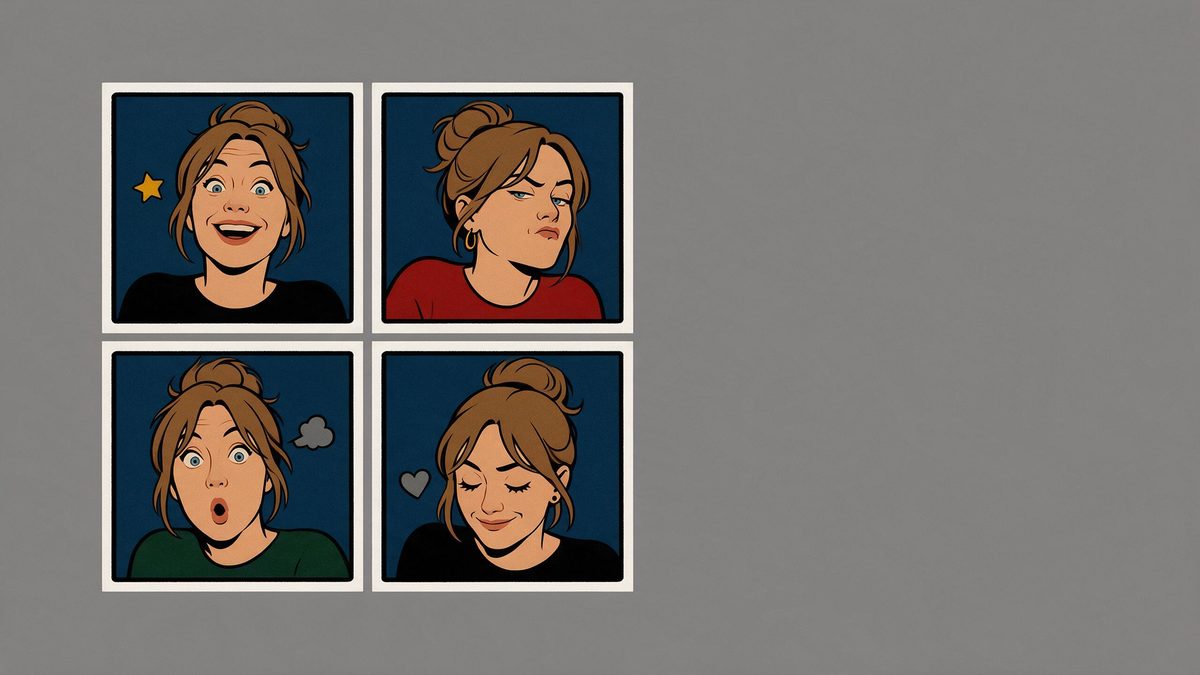
A sticker sheet is useful because one subject can communicate several reactions without changing the source photograph. This effect arranges that idea as a moving four-panel composition, turning a person, a pet, a pair, or a person with a pet into a set of comic-style expressions. The source remains simple, while the output creates the sense of a small coordinated collection that can be shown as a single vertical clip.
The video runs for 4 seconds at 720p in 9:16 and uses 100 credits per generation. Front-facing upper-body or full-body images are recommended. Some of the four expressions may look too similar, reducing the variety expected from the panel layout, and the opening portion can move slowly without clear action. Judge the result by both expression separation and pacing instead of assuming that four boxes necessarily deliver four distinct reactions.
Specs at a glance
Straight from the product panel, not from a marketing deck.
- Output
- 4-second video
- Credits
- 100 per run
- Resolution
- 720p
- Aspect ratio
- 9:16
- Input
- 1 photo — a person, a pet, a pair, or a person with a pet
- Best results with
- Front-facing upper-body or full-body shots
- Known limits
- Some of the four expressions can come out looking alike with little difference between them, and the first two seconds can move slowly with no clear action.
What it does
Built for this specific job, not a generic editor.
Four-panel expression layout
The output presents the source as a coordinated sticker sheet rather than one isolated character. Multiple panels give the clip a collection-like structure, making it suitable when the visual concept is variation around one person, pet, or small paired composition.
Human, pet, and mixed references
The single input can contain a person, a pet, a pair, or a person with a pet. That mix supports solo reaction sets, animal expression boards, couple material, and shared human-animal posts without separate cutouts.
Tall 9:16 organisation
The panels are delivered inside a fixed vertical frame at 720p. A tall format gives the sticker set room to stack and remain visible on a phone, but it also rewards a source whose subjects are not spread far across a wide photograph.
Compact animated sheet
The entire four-panel treatment appears within 4 seconds. That short format is appropriate for a quick reaction-board reveal, though the opening may contain limited movement and should be evaluated in the context of the intended placement.
How it works
Four steps, no timeline to learn.
Choose a direct, uncluttered portrait
Select 1 front-facing upper-body or full-body photograph of the supported subject arrangement. Keep the face, pet features, and important body outline visible, because the same source must remain readable when distributed across the panel treatment.
Allow for a vertical panel grid
Use a composition that can fit comfortably into 9:16. Centre the key subjects and reduce wide empty gaps, particularly for a pair or person with a pet, so the generated panels do not have to compress the relationship excessively.
Confirm the 100-credit generation
Upload the photograph to the Four-Panel Sticker template and check the displayed charge. One run costs 100 credits and returns a 4-second 720p vertical video containing the complete panel arrangement.
Compare expression variety
Review every panel rather than focusing on the most appealing one. Look for expressions that are effectively duplicates, then watch the beginning at normal speed to decide whether its limited action feels suitable for the final destination.
Where people use it
The jobs this effect actually gets used for.
Reaction-board profile posts
A solo portrait can become a compact set of visual moods for a profile update or character introduction. The strongest result shows meaningful contrast between panels, so inspect eyes, mouth, pose, and overall energy rather than relying on colour changes alone.
Pet expression collections
One pet photograph can be expanded into a playful sheet without asking the animal to perform different poses. A forward-facing image with visible ears and facial features gives each panel a better chance to communicate a recognisable variation.
Paired sticker sheets
Two people can share the four-panel layout as a coordinated set. Similar distance from the camera helps both remain legible, and a centred arrangement keeps the vertical output from favouring one side of a wide source.
Person-and-pet mini collections
A shared portrait of a person and pet can become a themed expression board in one run. Leave a visible boundary between the faces so the comic treatment can preserve the relationship without blending human and animal features.
Why panel variety matters more than panel count
The layout promises a set, but usefulness depends on meaningful differences inside it.
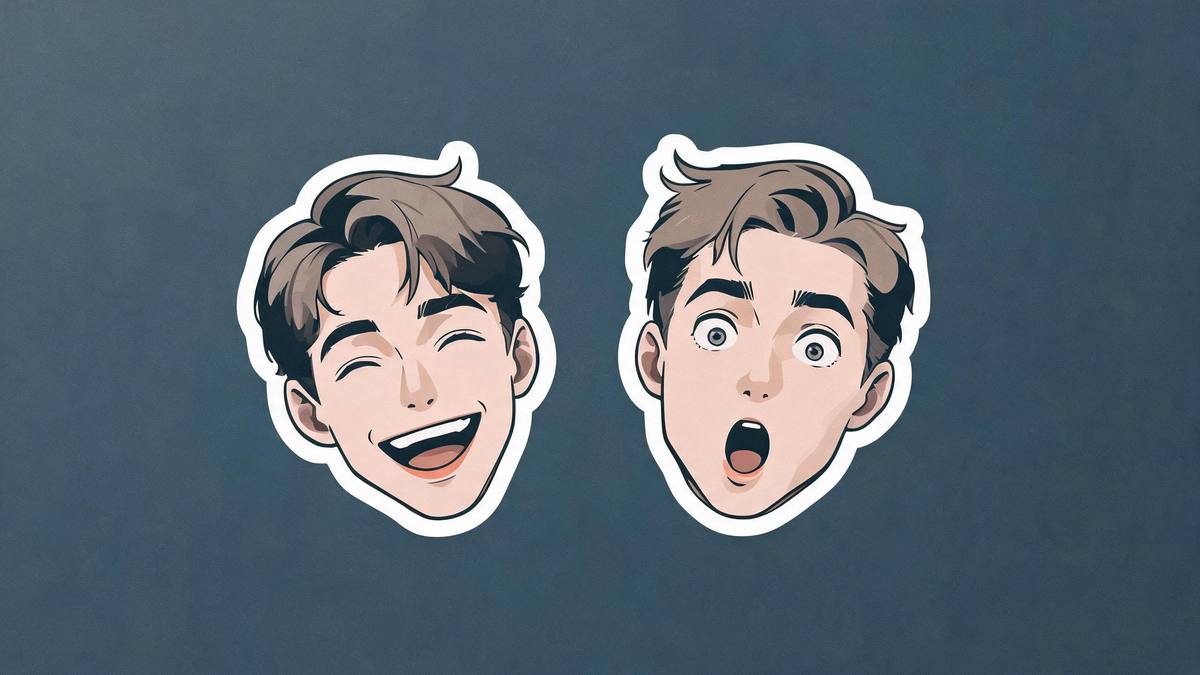
A four-panel design creates an expectation of range. Viewers look from one box to the next to find a change in expression, attitude, or pose. If the subject looks nearly the same across the grid, the structure becomes repetition rather than a collection. That makes inspection more important than it is for a single sticker clip. Compare panels directly and ask whether each contributes a distinct reaction that could be recognised at a small display size.
Source clarity still controls the outcome. A front-facing face provides eyes, mouth, and head shape that can be varied, while upper-body or full-body framing adds gesture. For a pair or a person with a pet, both subjects need enough size and separation to remain readable in each panel. The fixed 9:16 output helps the sheet fit a vertical screen, but a source arranged too widely can leave each figure small once the composition is reorganised into the tall grid.
The other known limitation is subdued movement near the beginning. A slow opening is not necessarily a problem for a sticker sheet viewed as a complete reveal, but it may underperform as the first visual in a fast sequence. Watch the 4-second clip at normal speed and decide whether the panel changes become apparent soon enough for your use. If the expression set is distinct but the opening is quiet, it may work better after an establishing image than as the initial hook.
Credits and plans
Every effect draws on one shared credit balance.
A Four-Panel Sticker generation costs 100 credits from one shared OpenFilmo balance, with the amount presented before confirmation. The Free plan supplies 30 credits per month without a card. Starter is $9 for 400 credits, Pro is $19 for 1,000, and Studio is $59 for 4,000.
Related guides
Longer reads on the same workflow, from the OpenFilmo blog.
Image to Video AI: Animate Any Photo in Seconds
A complete guide to image to video AI: what makes a good source image, how to write motion prompts, top use cases, and how to fix …
AI Video Prompt Formulas That Hold Up in Production
Prompt structures that work for AI video: subject, motion, camera, time and style — with tested formulas, failure patterns and a m…
AI Video Cost Per Minute: The Real Numbers in 2026
How to calculate true AI video cost per finished minute: generation price, regeneration waste, edit time and iteration, with worke…
Related effects
Same family of effects, on the same kind of input.
Frequently asked questions
Which photos can become a four-panel sticker video?
Use 1 photo of a person, a pet, a pair, or a person with a pet. A front-facing upper-body or full-body source gives the panel set clear expressions and outlines to reinterpret across the composition.
What format does the four-panel effect return?
The finished file is a 4-second video at 720p in a fixed 9:16 aspect ratio. It presents the sticker treatment vertically, so select a source whose main subjects can remain clear inside a tall layout.
What is the price of one run?
Each generation requires 100 credits. The charge appears before you approve the run and covers the complete four-panel animation produced from the single uploaded photograph.
Why do several panels look almost identical?
Some of the four expressions can come out looking alike with little difference between them. Compare the entire set for changes in face and pose, and reject a result when the repeated expressions defeat the purpose of the panel format.
Does the four-panel animation move immediately?
The opening portion can progress slowly without clear action. View the complete clip at normal speed to determine whether that pacing suits a reaction set, or whether it should appear later inside a faster edit.