
New Year effect
The Door Opens, Then the Sky Fills With Red
Red envelope rain is a screen effect that only works when the timing is right: the door opens first, and only then does anything fall. Get that order wrong and it looks like a glitch. This template holds the order.
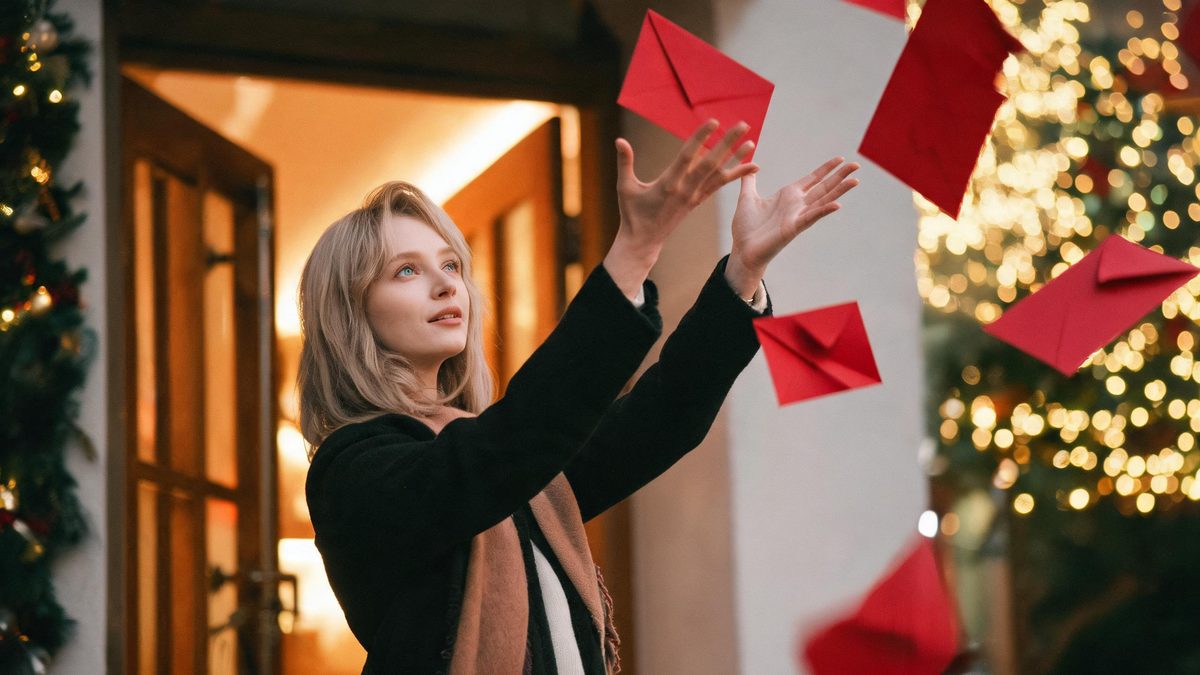
The effect everyone actually wants is the one where a door swings open and the room behind it is full of red envelopes falling like rain. It is a single gesture with a single reveal, and the reveal is the entire point — which is why the timing has to be exact.
This template takes one photo of one person or two, generates a door beside them, opens it, and drops the envelopes. Nothing appears before the door moves. You get a 4-second 720p video in the aspect ratio of your source photo, for 60 credits per run.
Specs at a glance
Straight from the product panel, not from a marketing deck.
- Output
- 4-second video
- Credits
- 60 per run
- Resolution
- 720p
- Aspect ratio
- Matches your input photo
- Input
- 1 photo — one person or two people
- Best results with
- A frame with the subject slightly off-centre and open space on one side for the door to open into
- Known limits
- The door is generated, not the one in your photo, and the effect requires a real opening action before anything falls — nothing pops out in advance. What falls is red envelopes, not gold coins, and the subject is expected to catch them with both hands, so a photo where the hands are already full breaks the catch. Two people share one door and one downpour.
What it does
Built for this specific job, not a generic editor.
The reveal is sequenced
The door opens first and the downpour follows. That ordering is the difference between a moment and a mess, and it is why the template asks for open space on one side of the frame — the door has to have somewhere to swing into.
Red envelopes, not coins
What falls is red envelopes. The template is explicit about this because the two get confused constantly in generated celebration footage, and a rain of gold coins reads as a different effect entirely.
Both hands get something to do
The subject catches the envelopes with both hands, which gives the clip a physical centre. That is also why empty hands in the source photo are a requirement rather than a suggestion.
Real output specs
Four seconds at 720p, aspect ratio inherited from your source photo, 60 credits per run, shown before you confirm. The free tier includes 30 credits every month.
How it works
Four steps, no timeline to learn.
Pick a frame with room on one side
The door is generated next to the subject, so it needs space. A photo where the subject sits slightly off-centre with empty room to the left or right gives the effect somewhere to build the door.
Keep the hands empty
The catch is the whole point. A phone, a cup or a bag strap in the hands will break it, and the envelopes will fall past the subject instead of into them.
Watch the door, not the rain
Check that the door genuinely opens before anything falls. If envelopes appear without the door moving, the source framing left no room for the door to be placed and opened.
Re-run with more side room
A second attempt with a wider frame usually produces a cleaner door and a better downpour. Each run costs 60 credits, so choose the photo with the most open space first.
Where people use it
The jobs this effect actually gets used for.
A New Year greeting
The clip is short, self-explanatory and needs no caption. It posts cleanly to a story or a private message as a moving greeting card.
A countdown or run-up post
One clip per day in the days before the New Year, with the same subject framed the same way, builds a small series that reads as deliberate.
An opener for a family recap
A door opening into a downpour of red is a strong first beat for a short recap edit, and it sets the occasion without a word.
Testing a reveal on camera
Creators planning a practical version of this shot use the template to preview how the reveal reads before building the rig for it.
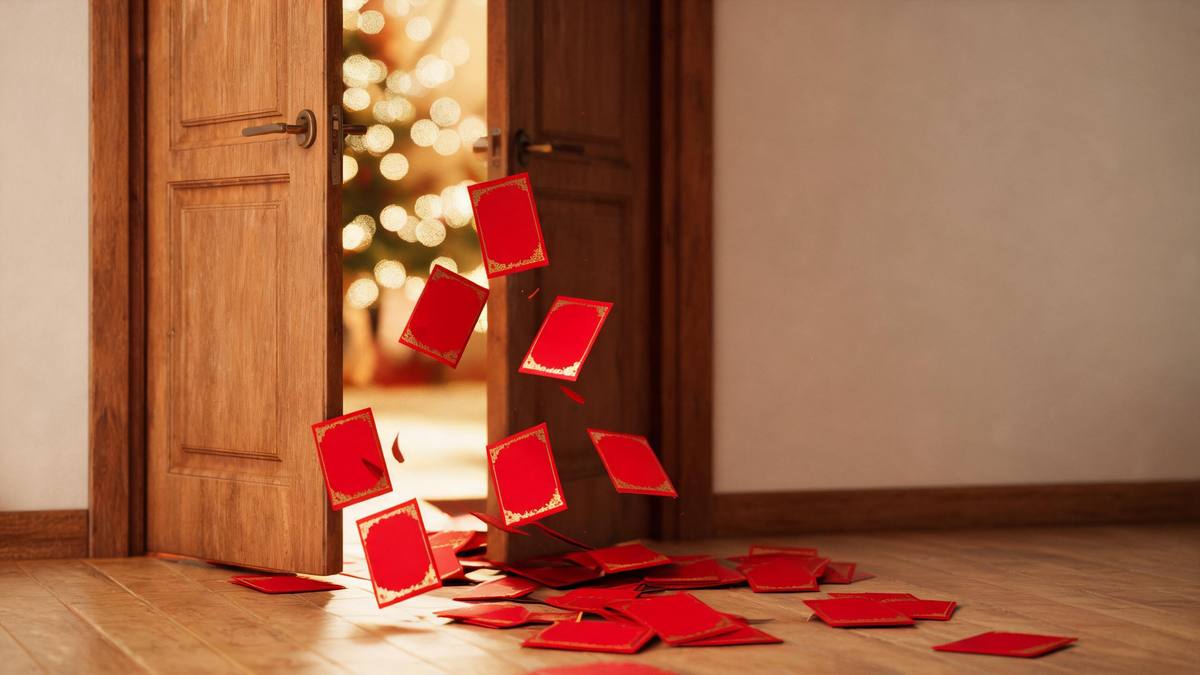
Why the door has to open first
A reveal is a promise about order. Break the order and the effect is gone.
Red envelope rain works because of anticipation. The viewer sees a closed door, sees it move, and only then sees what was behind it. Every version of this effect that fails has skipped one of those three beats.
Generating the sequence from a still makes the order controllable. The door is placed, opened and filled in a fixed order, so the reveal lands the same way every run instead of depending on how steady the camera was.
The honest limits are on this page: the door is generated rather than the one in your photo, what falls is red envelopes and not coins, and hands that are already full break the catch.
Credits and plans
Every effect draws on one shared credit balance.
Every effect draws on the same credit balance. This one costs 60 credits per run, shown before you confirm. Free accounts receive 30 credits every month with no card and no watermark on the output, which is enough to test the effect once.
Related guides
Longer reads on the same workflow, from the OpenFilmo blog.
Image to Video AI: Animate Any Photo in Seconds
A complete guide to image to video AI: what makes a good source image, how to write motion prompts, top use cases, and how to fix …
AI Video Prompt Formulas That Hold Up in Production
Prompt structures that work for AI video: subject, motion, camera, time and style — with tested formulas, failure patterns and a m…
Best AI Video Generators 2026: 15 Tools Tested
We tested 15 AI video generators on the same prompts and ranked them for 2026. Compare quality, speed, credit pricing and commerci…
Related effects
Same family of effects, on the same kind of input.
Frequently asked questions
Can I use a photo of two people?
Yes. The template accepts one person or two, and two people share one door and one downpour. Front-facing frames with empty hands and open space beside the subject work best.
Can I choose what falls?
No. What falls is red envelopes, and the template is explicit about it. If you want gold coins rather than envelopes, that is a different template in the library.
Is the door the one in my photo?
No. The door is generated and placed beside the subject, which is why the effect needs open space on one side of the frame. Anything behind the subject in your photo stays as the background.
What kind of photo works worst?
Hands that are already holding something, subjects cropped hard against the frame edge, and busy backgrounds on the side where the door needs to open.
Can I use the clip commercially?
Yes. Output is yours to publish, including in paid posts, on every plan including the free tier. The only restriction is the source photo: use an image you own or have permission to use.