
New Year effect
A Toast That Fills the Glass For You
A toast is two hands, two glasses and one beat of eye contact. That is a lot to coordinate on the night and almost impossible to get clean in four seconds of handheld footage. This effect builds the whole table around one photo.
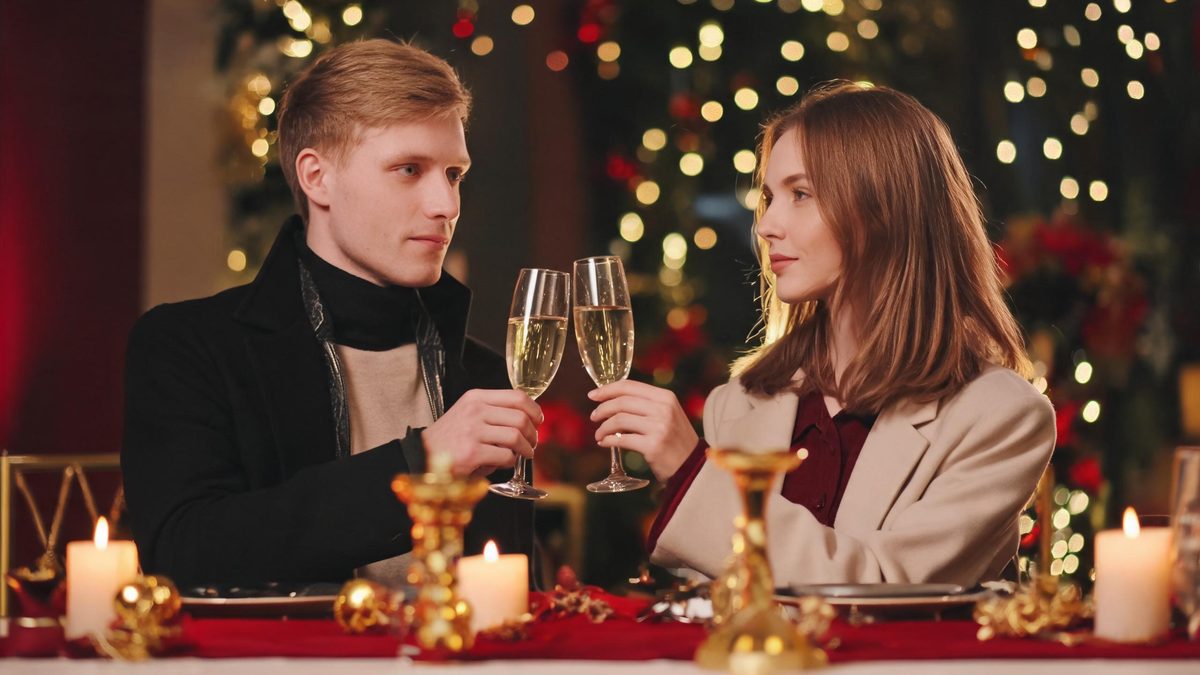
Everyone has the same problem with celebration footage: by the time the camera is up, the moment is over. A toast is the worst offender, because the beat you want — glasses meeting, eyes up, a smile — lasts about a second and happens exactly once.
This template reverses the order. You upload a single photo of one person or two, and the effect places them at a New Year table with a champagne flute in hand, raises the glass and completes the toast. You get a 4-second 720p video in the aspect ratio of your source photo, for 60 credits per run.
Specs at a glance
Straight from the product panel, not from a marketing deck.
- Output
- 4-second video
- Credits
- 60 per run
- Resolution
- 720p
- Aspect ratio
- Matches your input photo
- Input
- 1 photo — one person or two people
- Best results with
- A front-facing frame at a table or in a room, hands empty and visible
- Known limits
- The template is named for two people but accepts a single-person photo: the second glass and the second hand are generated to match. The colour grade is forced warm and festive — a deliberately cold or black-and-white source is overridden. Each visible person receives exactly one glass, so a source photo with three or more people will not produce a clean toast.
What it does
Built for this specific job, not a generic editor.
The glass arrives in the hand
The flute is generated into the frame rather than composited, so the light on it matches the room. Empty hands in the source photo are what make that work — anything already held competes with the glass.
One person or two, both accepted
Despite the name, a single-person photo is a valid input. The second glass and the second hand are generated to match, which is why the template reads the subject count from the photo instead of assuming a pair.
Warm and festive by default
The colour grade is deliberately pushed warm and celebratory. A cold or black-and-white source is overridden, because a monochrome toast reads as a different mood entirely and the template is built for one specific register.
Real output specs
Four seconds at 720p, aspect ratio inherited from your source photo, 60 credits per run. The credits are shown before you confirm, and the free tier includes 30 credits every month.
How it works
Four steps, no timeline to learn.
Pick a front-facing frame
Choose a photo where the subject faces the camera with hands empty and visible. A frame taken at a table or in a room gives the effect a room to build around; a tight portrait leaves it guessing.
Keep the group small
Every visible person receives exactly one glass. One or two people produce a clean toast; three or more in a single photo usually comes back with a glass that does not belong to anyone in particular.
Watch the raise, not the cut
The beat that matters is the glass coming up. If the flute appears already raised with no movement, the source framing was too tight for the arm to travel — try a slightly wider photo.
Re-run with a different source
Because the room and the second hand are generated, a second attempt with a different photo can change the whole feel of the clip. Each run costs 60 credits, so it is worth choosing well first.
Where people use it
The jobs this effect actually gets used for.
A midnight post
The clip is short enough to post without trimming and clear enough that no caption is needed. It reads as a celebration that was already happening when the camera arrived.
A long-distance toast
For people who cannot be at the same table, a clip where two photos meet in one raised glass carries more than a static picture sent back and forth.
An opener for a recap video
A four-second toast is a clean first beat for a year-in-review edit, and it needs no dialogue to set the occasion.
Testing a table scene
Creators planning a real celebration shoot use this to preview how a toast reads on camera before booking a location and a table.
Why a generated toast beats a filmed one
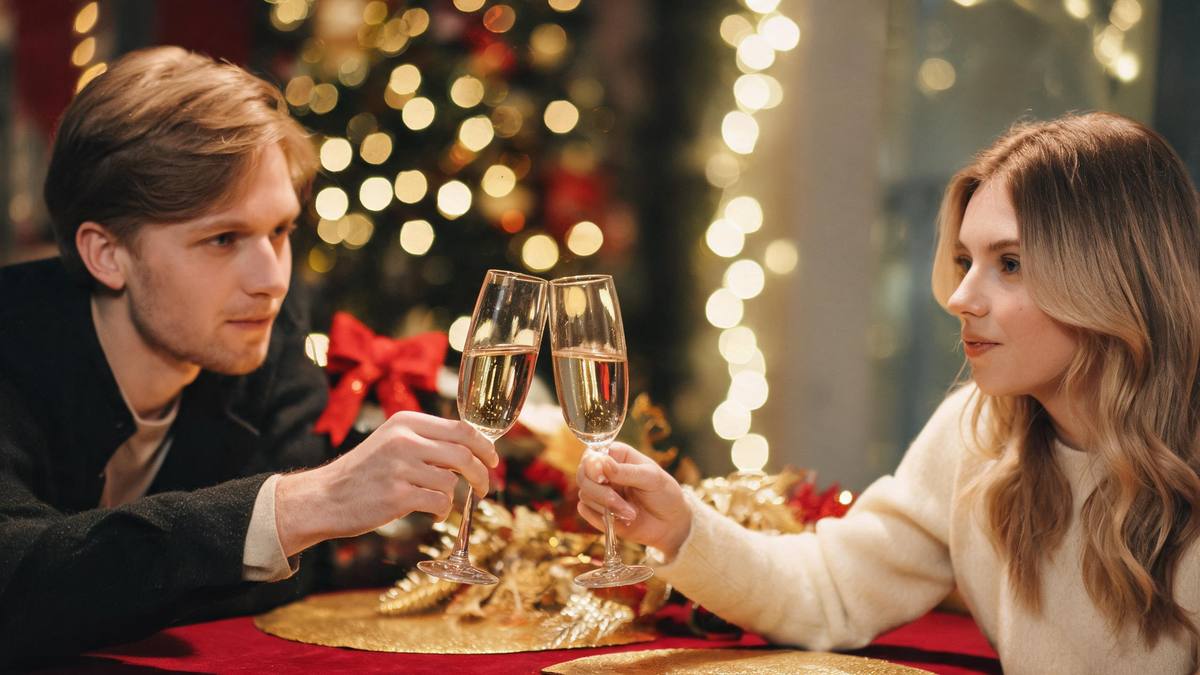
The moment you want lasts a second and happens once. Generation lets you take it twice.
Filmed toasts fail for a mechanical reason: the person holding the camera cannot be in the shot. You either get the glasses or you get the faces, and the take where both work is the one nobody was ready for.
Building the scene from a still removes that constraint entirely. The framing is decided before the toast happens rather than during it, which is why the result looks composed rather than snatched.
The trade-off is stated plainly: the room, the glass and any second hand are generated, and the colour grade is fixed warm. What you control is the photo — who is in it, how they are framed and what they are holding.
Credits and plans
Every effect draws on one shared credit balance.
Every effect draws on the same credit balance. This one costs 60 credits per run, and the cost is shown before you confirm. Free accounts receive 30 credits every month with no card and no watermark on the output, enough to test the effect once before topping up.
Related guides
Longer reads on the same workflow, from the OpenFilmo blog.
Image to Video AI: Animate Any Photo in Seconds
A complete guide to image to video AI: what makes a good source image, how to write motion prompts, top use cases, and how to fix …
Character Consistency in AI Video: What Actually Works
How to keep characters consistent across AI video shots: reference images, prompt discipline, key frame locking and post-hoc corre…
AI Video Prompt Formulas That Hold Up in Production
Prompt structures that work for AI video: subject, motion, camera, time and style — with tested formulas, failure patterns and a m…
Related effects
Same family of effects, on the same kind of input.
Frequently asked questions
Does it really need two people?
No. A single-person photo is accepted and the second glass and hand are generated to match. A two-person photo is also fine, and produces a toast between two people who were never in the same frame.
Can I choose what is in the glasses?
The template places a champagne flute and the grade is fixed warm and festive. What you control is the source photo: framing, lighting and whether the hands are empty and visible.
Why does my photo come back warmer than I shot it?
The colour grade is deliberately pushed warm and celebratory for this template, and a cold or black-and-white source is overridden. It is a fixed part of the effect rather than a setting.
What kind of photo works worst?
Hands that are already full, three or more people in one frame, and tight crops that leave no room for an arm to travel. All three remove information the effect needs to place the glass and raise it.
Can I use the clip commercially?
Yes. Output is yours to publish, including in paid posts, on every plan including the free tier. The only restriction is the source photo: use an image you own or have permission to use.