
AI Landscape Photo Prompts for Quiet Scenes
A landscape prompt describes the land, the sky and the light. Use these to plan a frame or to preview a scene before you stand in it.
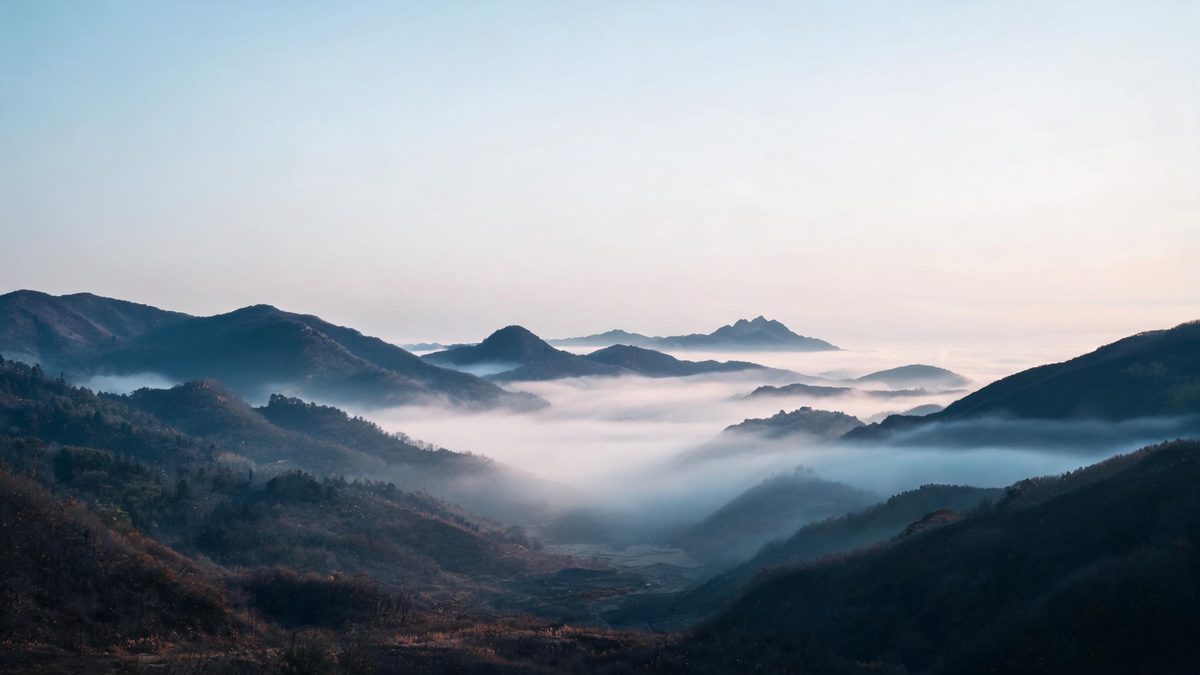
These AI landscape photo prompts are written for open nature — mountains, forests, shores — with no people required, so the results stay calm and free of any consent questions. They describe weather, scale and light, never anything explicit.
Landscape photography lives on atmosphere. The prompts below lean into fog, long light and wide compositions, so the scene feels larger than the frame. Copy one, swap in your own location, and you have a starting point.
The core idea
Four principles behind every prompt on this page.
Scale by reference
A tree, a figure at the rim, or a cabin gives the eye a size cue. Without it the scene floats.
Light sets the hour
Golden hour and blue hour carry landscape mood. Flat midday light flattens the depth you want.
Weather is composition
Fog, mist and storm light shape a frame more than any lens. Name the weather on purpose.
No people needed
Pure landscapes avoid consent issues entirely. If you add a person, keep them tiny and anonymous.
Step-by-step
The order that keeps you from debugging five things at once.
Choose a terrain
Mountain, forest, or shore — the groups below cover the common landscape looks.
Copy a prompt
Use the Copy button. Each prompt already includes light and mood, so it runs as written.
Name your place
Replace the generic terrain with your own, or keep it generic while exploring style.
Generate a few
Free covers about fifteen images a month. Try two or three light setups before keeping one.
Export
Export with no watermark on Free. If the place is real and recognizable, label it honestly when you share.
Prompt recipes
Paste as-is, then swap the subject for yours. Use Copy on any card.
Misty peaks
Landscape photo, layered mountain peaks in morning mist, soft cool light, wide 16:9, no text, no watermark.
Why it works: Mist separates the ridges and gives the frame natural depth without effort.
Shore at dawn
Landscape photography, a quiet shore at dawn, wet sand reflecting a pale sky, no text, no watermark.
Why it works: A wet shore doubles the sky and keeps the horizon calm.
Pine forest
Landscape photo, a straight pine forest with light shafts, green and calm, no text, no watermark.
Why it works: Light shafts through trees add structure to an otherwise flat wall of green.
Dune lines
Landscape photography, wind-shaped sand dunes at low sun, long shadows, warm tones, no text, no watermark.
Why it works: Dune ridges are ready-made leading lines toward the sun.
Waterfall mist
Landscape photo, a waterfall in a green canyon, fine mist, soft light, no text, no watermark.
Why it works: Mist softens the spray and keeps the focus on the drop.
Autumn valley
Landscape photography, a wide valley in autumn color, clear light, no text, no watermark.
Why it works: Seasonal color is the easiest way to make a valley feel specific.
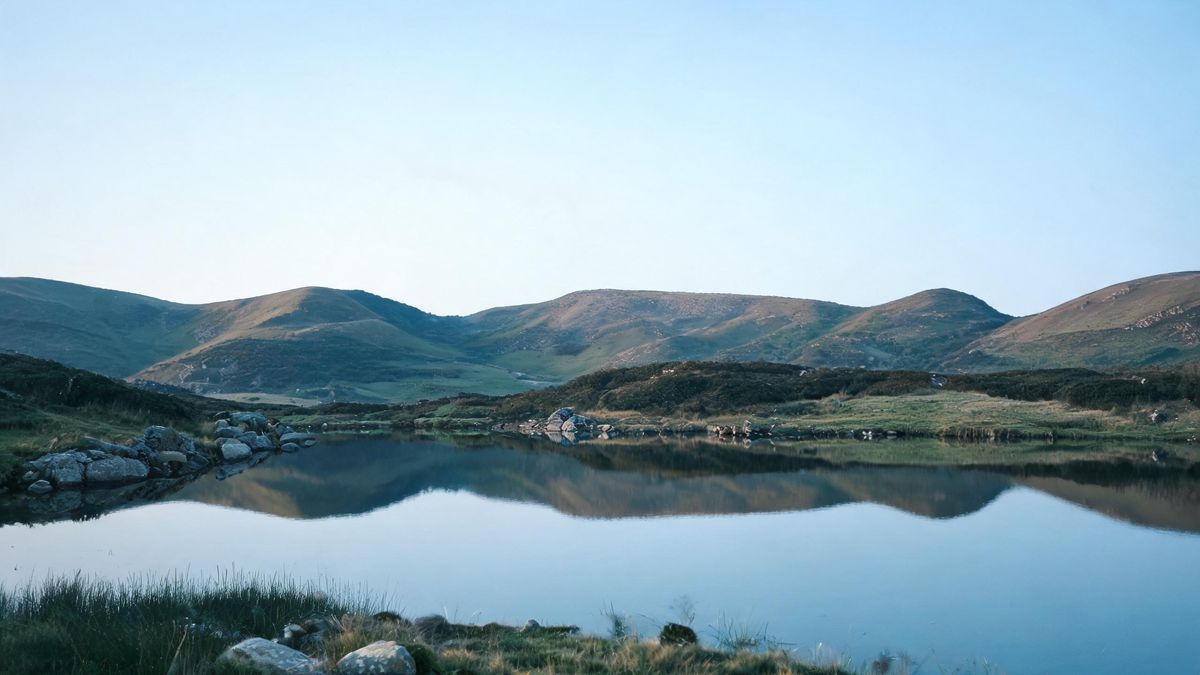
Lake mirror
Landscape photo, a still lake mirror-reflecting hills, cool morning, no text, no watermark.
Why it works: A mirror reflection doubles the composition with zero extra effort.
Storm light
Landscape photography, an open plain under breaking storm light, dramatic clouds, no text, no watermark.
Why it works: Breaking light after a storm gives landscape its most dramatic sky.
Common mistakes
The ones that account for most weak results.
No scale cue
Without a tree or cabin the scene has no size. Add one small reference so the eye can measure.
Flat midday light
Hard overhead sun flattens depth. Shift to golden hour or blue hour in the prompt.
Over-saturated color
Too much color reads as fake. Ask for natural tone and let the terrain carry it.
Busy foreground
Cluttered edges compete with the land. Name a clean foreground so the eye settles.
Why landscape prompts need atmosphere
A landscape frame fails when it looks flat. The prompt has to name the light and the weather.
An open scene is not automatically a landscape. The viewer reads the place from weather and light, so the prompt must name them. Without atmosphere, the model produces a flat, poster-like gradient.
Light does the depth work. Golden hour and blue hour create long shadows and soft transitions; flat overhead light destroys the layering a landscape needs. Naming the hour is the cheapest way to add depth.
Pure landscapes avoid the consent risk entirely because no recognizable person is required. If you add a figure for scale, keep them tiny and anonymous, and the result stays safe to share anywhere.
Practise it in OpenFilmo
Every recipe on this page runs in the same workspace.
One image costs 2 credits and a 4K upscale costs 4. The Free plan gives you 30 credits every month with no credit card, no watermark and commercial use included — roughly fifteen images before you pay anything. Paid plans start at $9 for 400 credits and add faster generation and parallel tasks.
Related guides
Longer reads on the same workflow, from the OpenFilmo blog.
AI Video Prompt Formulas That Hold Up in Production
Prompt structures that work for AI video: subject, motion, camera, time and style — with tested formulas, failure patterns and a m…
Text to Video AI: Turn Any Prompt Into Video
Learn how text to video AI works, the four-part prompt formula that produces usable clips, how to fix common failures, and where i…
Character Consistency in AI Video: What Actually Works
How to keep characters consistent across AI video shots: reference images, prompt discipline, key frame locking and post-hoc corre…
AI Video Watermarking and C2PA: Provenance Explained
How AI video watermarking, embedded metadata and C2PA content credentials differ, what survives re-encoding and screenshots, and h…
Related prompt collections
More copy-ready prompt sets on the same problem.
Frequently asked questions
Are these landscape prompts appropriate?
Yes. They describe terrain, weather and light only, with no explicit content and no people required at all.
How many can I generate free?
The Free plan gives 30 credits a month with no credit card, about fifteen images, with no watermark on export. One image costs 2 credits.
Why does my landscape look flat?
Usually the light or weather was missing. Add "golden hour" or "morning mist" to bring back the depth.
Can I add a person for scale?
Yes, but keep them tiny and anonymous. A recognizable individual depicted without consent is not safe to use.
Can I upscale a landscape photo?
Yes. The Free plan image upscaler can sharpen and enlarge a result when you want a larger file.
Video prompt collections
Copy-ready prompt sets for text-to-video, image-to-video, product, UGC, social and tutorial clips.