
AI Food Photo Prompts That Make You Hungry
A food prompt describes the dish, the surface and the light. Use these to plan a shot or to preview a frame before you cook.
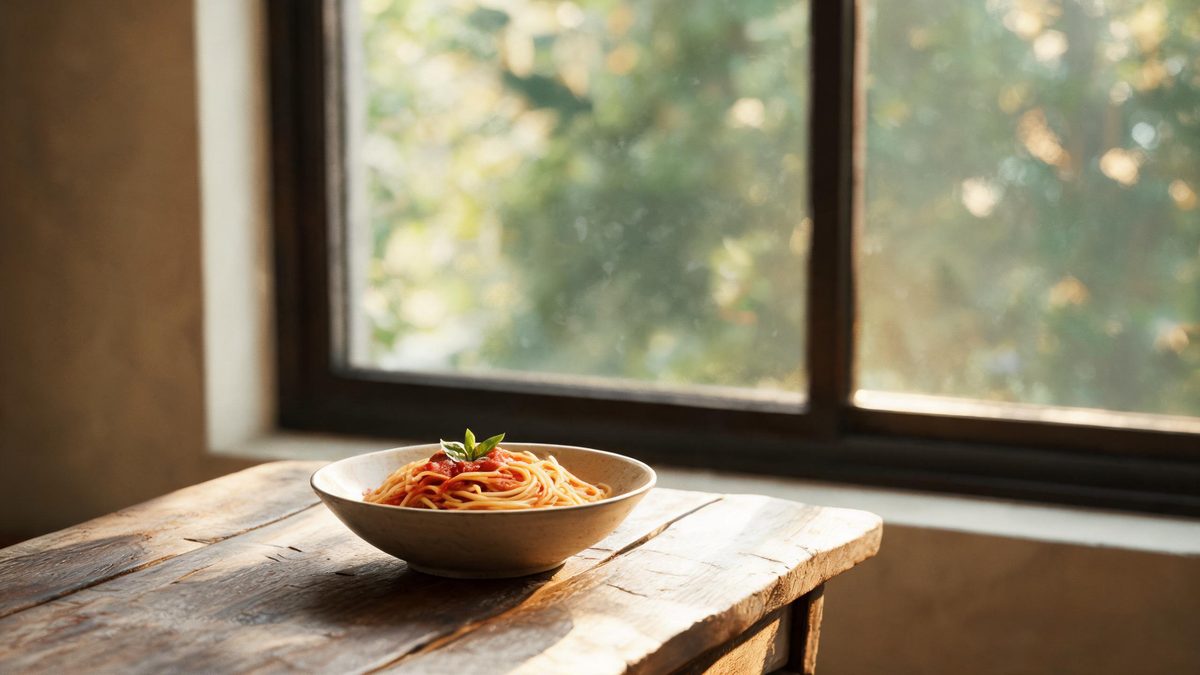
These AI food photo prompts are written for dishes and ingredients, with no people required, so the results stay clean and free of any consent questions. They describe styling, surface and light, never anything explicit.
Food photography is about texture and warmth. The prompts below lean into natural light and honest surfaces — a wooden table, a linen cloth — so the dish looks like something you would actually eat. Copy one and swap in your own plate.
The core idea
Four principles behind every prompt on this page.
Natural light only
Window light and soft side light flatter food. Hard flash reads as a catalogue and kills appetite.
Surface sets the mood
Wood, stone, or linen tells the viewer the setting. Name the surface so the frame feels real.
Steam and texture
A little steam or crumb texture signals freshness. Ask for it on purpose.
No hands required
Dishes alone avoid consent issues entirely. If you add a hand, keep it generic and out of focus.

Step-by-step
The order that keeps you from debugging five things at once.
Pick a style
Flatlay, plated, or cafe — the groups below cover the common food looks.
Copy a prompt
Use the Copy button. Each prompt already includes light and surface, so it runs as written.
Describe your dish
Replace the generic plate with your own, or keep it generic while exploring style.
Generate a few
Free covers about fifteen images a month. Try two or three framings before keeping one.
Export
Export with no watermark on Free. If the dish is real, label it honestly when you post.
Prompt recipes
Paste as-is, then swap the subject for yours. Use Copy on any card.
Top-down pasta
Food photo, a bowl of pasta from above on a wooden table, warm window light, shallow depth, no text, no watermark.
Why it works: A top-down bowl reads as homemade and keeps the focus on the food.
Coffee flatlay
Food photography, a coffee cup with a notebook and croissant, soft morning light, linen cloth, no text, no watermark.
Why it works: A small flatlay tells a morning story without needing a face.
Plated dessert
Food photo, a plated dessert with a sauce swirl, side light, dark background, no text, no watermark.
Why it works: A dark background makes the plate pop like a restaurant shot.
Market vegetables
Food photography, fresh vegetables on a stone surface, natural light, honest color, no text, no watermark.
Why it works: Raw ingredients read as fresh and avoid any "too perfect" fake look.
Burger close
Food photo, a burger in close side view, warm light, slight steam, no text, no watermark.
Why it works: A slight steam signals just-cooked and triggers appetite.
Breakfast table
Food photography, a breakfast spread on a rustic table, soft light, calm mood, no text, no watermark.
Why it works: A spread implies a meal and a moment, not just one item.
Smoothie top
Food photo, a smoothie bowl from above with fruit on top, bright light, no text, no watermark.
Why it works: Top-down with toppings is the most shareable food angle.
Cake slice
Food photography, a slice of cake on a plate, side light, soft shadow, no text, no watermark.
Why it works: A single slice implies a celebration without a crowded table.
Common mistakes
The ones that account for most weak results.
Hard flash light
Flash flattens food and kills appetite. Use "window light" or "soft side light."
No surface
Food on nothing reads as floating. Name wood, stone, or linen so it sits in a place.
Over-perfect look
Too clean reads as CG. Add a crumb or slight steam for honesty.
Busy background
Clutter competes with the plate. Name a plain or dark background so the dish leads.
Why food prompts need natural light
A food frame fails when it looks like a catalogue. The prompt has to ask for warmth, not flash.
A dish in a frame is not automatically appetizing. The viewer reads freshness from light and texture, so the prompt must name them. Without warmth, the model produces a flat, synthetic plate.
Light does the appetite work. Window light and soft side light signal "just made"; hard flash signals "packaged." Naming the light is the cheapest way to make food look edible.
Plated dishes alone avoid the consent risk entirely because no recognizable person is required. If you add a hand for scale, keep it generic and out of focus, and the result stays safe to share.
Practise it in OpenFilmo
Every recipe on this page runs in the same workspace.
One image costs 2 credits and a 4K upscale costs 4. The Free plan gives you 30 credits every month with no credit card, no watermark and commercial use included — roughly fifteen images before you pay anything. Paid plans start at $9 for 400 credits and add faster generation and parallel tasks.
Related guides
Longer reads on the same workflow, from the OpenFilmo blog.
AI Content Labeling Rules: What You Must Disclose in 2026
What AI content labelling rules require: what to disclose, where human review is mandatory, and how platform rules differ from law…
Image to Video AI: Animate Any Photo in Seconds
A complete guide to image to video AI: what makes a good source image, how to write motion prompts, top use cases, and how to fix …
Best AI Video Generators 2026: 15 Tools Tested
We tested 15 AI video generators on the same prompts and ranked them for 2026. Compare quality, speed, credit pricing and commerci…
AI UGC Video Generator: Creator Ads at Scale
How to use an AI UGC video generator for creator-style ads at scale: hook formulas, script structure, a testing framework and disc…
Related prompt collections
More copy-ready prompt sets on the same problem.
Frequently asked questions
Are these food prompts appropriate?
Yes. They describe dishes, surfaces and light only, with no explicit content and no people required.
How many can I generate free?
The Free plan gives 30 credits a month with no credit card, about fifteen images, and exports carry no watermark. One image costs 2 credits.
Why does my food look fake?
Usually hard light or too-clean styling. Add "window light" and a crumb or steam for honesty.
Can I add a hand in frame?
Yes, but keep it generic and out of focus. A recognizable individual depicted without consent is not safe to use.
Can I upscale a food photo?
Yes. The Free plan image upscaler can sharpen and enlarge a result for a larger, crisper file.
Video prompt collections
Copy-ready prompt sets for text-to-video, image-to-video, product, UGC, social and tutorial clips.