
Trending effect
Your Walk, Their Carpet
The red carpet is the one setting where walking slowly is the entire job. This effect puts your photo on that carpet: flashes, carpet, wall of photographers, and four seconds of walk.
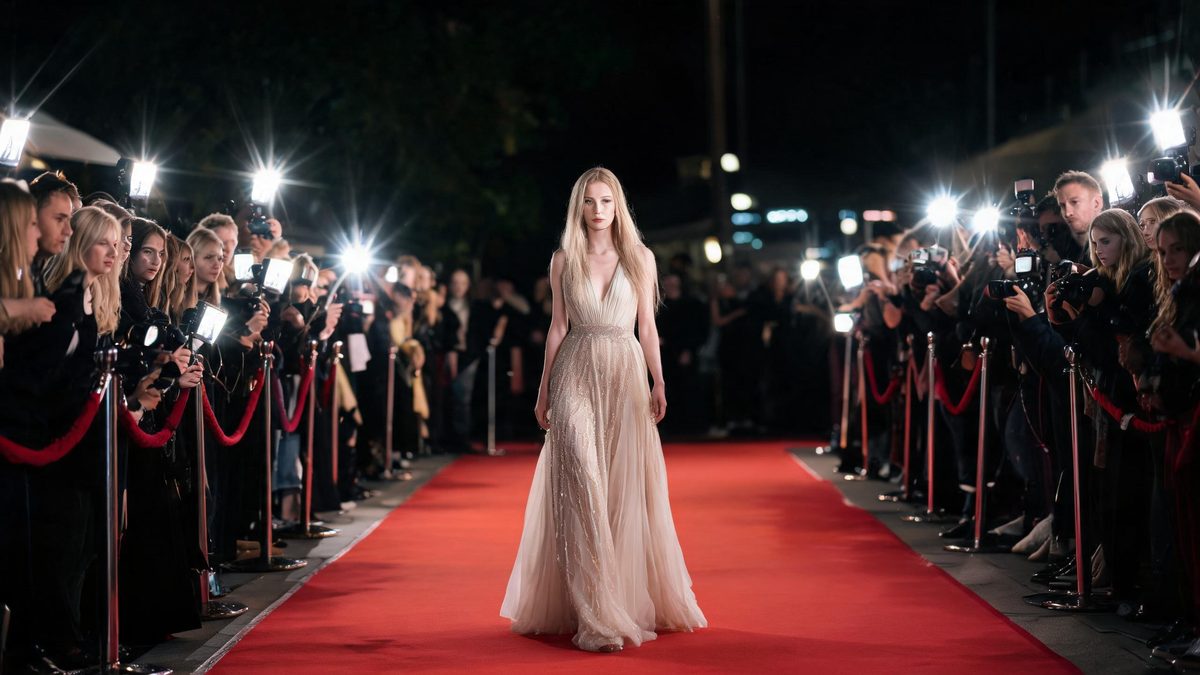
Awards-season content dominates feeds every year, and the walk is its signature shot. Recreating it normally means an event, a dress and a photographer. This template means one photo.
Upload a single portrait and the effect stages your walk: 4 seconds at 720p for 60 credits, with the aspect ratio chosen per request — 16:9 for a cinematic crop, 9:16 for Reels and Shorts, 1:1 for feed. It accepts one person or one pet. The walk, the flashes and the carpet are all generated, so the only thing you supply is the subject.
Specs at a glance
Straight from the product panel, not from a marketing deck.
- Output
- 4-second video
- Credits
- 60 per run
- Resolution
- 720p
- Aspect ratio
- 16:9, 9:16 or 1:1 — chosen per request, not taken from your photo
- Input
- 1 photo — one person or one pet
- Best results with
- The subject framed half-body or full-body, pets full-body
- Known limits
- You pick the aspect ratio instead of inheriting it from the photo. In a small share of runs the subject walks backwards down the carpet or turns away from the camera mid-stride, so the walk is the part to review before posting.
What it does
Built for this specific job, not a generic editor.
You choose the aspect ratio
Unlike most templates, which inherit the shape of your photo, this one lets you set 16:9, 9:16 or 1:1 per run. Pick the destination first — vertical for shorts, wide for an opening shot.
Pets walk too
One pet on the carpet is a supported input, and it is exactly as good for engagement as you would expect. Full-body framing gives the walk the most to work with.
The flashes do the storytelling
Pop-bulb staccato light is what makes a carpet read as a carpet. The generated lighting carries the setting so completely that the outfit barely has to change.
Fixed 60 credits, 4 seconds
This is a 60-credit template — above the 40-credit baseline of the group. The price is published here so the upgrade is a decision, not a surprise.
How it works
Four steps, no timeline to learn.
Frame half-body or full-body
A half-body or full-body portrait is the best input; pets should be full-body. The walk needs a body, so a tight head crop gives the effect nothing to move.
Pick the ratio for the destination
Choose 9:16 if the clip is destined for Reels, Shorts or TikTok; 16:9 for a cinematic intro or a channel opening. Deciding this before the run avoids re-running at 60 credits.
Review the direction of the walk
In a small share of runs the subject walks backwards down the carpet or turns away mid-stride. If the walk reads wrong, re-run — direction is the known fragile part, not the setting.
Pair it with the runway template
The fashion runway template is the same family with a different set and walk. Running both on one portrait gives you a matched two-shot for a single post.
Where people use it
The jobs this effect actually gets used for.
Awards-season posting
When every feed is carpet content for a month, a clip of your own walk joins the conversation without an invitation. It is the cheapest ticket to the season.
Premiere and launch parties
Small events borrow big-event language. Post your own carpet walk the night of a launch and the clip does the branding for you.
A channel opening shot
The 16:9 version works as an intro card for creator channels — a walk toward camera with flashes sets a tone nothing else matches for the price.
Pet accounts
A full-body pet on the carpet is a reliable format for pet accounts during awards season. The template stages it with the same flashes as the human version.
Why the carpet format keeps returning
Every camera format eventually gets a red-carpet version, because the walk is pure coverage.
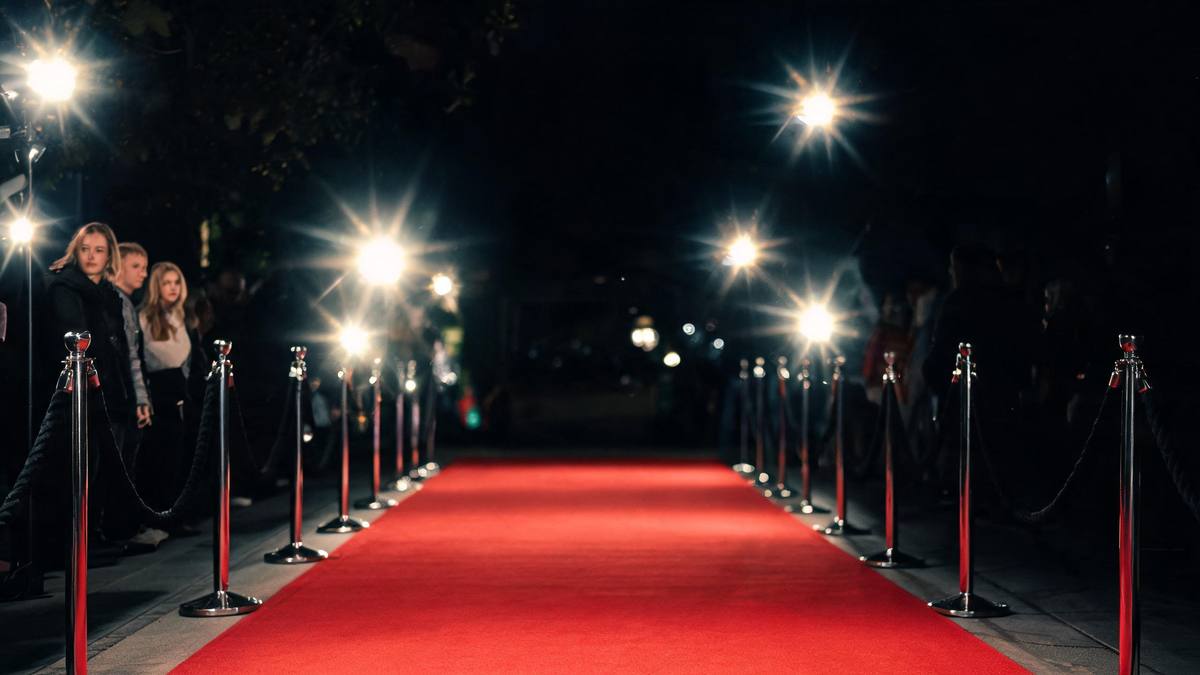
The reason carpet content survives every season is structural: a slow walk toward camera with strobing flashes is legible in any aspect ratio, any outfit, any era. It is the most reusable shot in celebrity media.
Generating it from a photo removes the three costs that kept ordinary people out of the format — the event, the outfit and the photographer. What remains is the walk itself, which is the part viewers actually watch.
The trade-offs are stated plainly: 60 credits, a selectable aspect ratio, one subject, and a walk whose direction occasionally needs a re-run. Review the stride before posting and the format delivers exactly what it promises.
Credits and plans
Every effect draws on one shared credit balance.
Every effect draws on the same credit balance. This one costs 60 credits per run, shown before you confirm. Free accounts receive 30 credits every month with no card and no watermark on the output.
Related guides
Longer reads on the same workflow, from the OpenFilmo blog.
Image to Video AI: Animate Any Photo in Seconds
A complete guide to image to video AI: what makes a good source image, how to write motion prompts, top use cases, and how to fix …
AI Video Prompt Formulas That Hold Up in Production
Prompt structures that work for AI video: subject, motion, camera, time and style — with tested formulas, failure patterns and a m…
AI Video Cost Per Minute: The Real Numbers in 2026
How to calculate true AI video cost per finished minute: generation price, regeneration waste, edit time and iteration, with worke…
Related effects
Same family of effects, on the same kind of input.
Frequently asked questions
Which aspect ratios are supported?
16:9, 9:16 and 1:1 — chosen per request rather than inherited from your photo. Pick based on destination: vertical for Reels and Shorts, wide for cinematic use.
Why does my subject walk backwards sometimes?
Walk direction is the known fragile part: in a small share of runs the subject walks backwards or turns away mid-stride. Re-run the template; the setting is stable, the stride occasionally is not.
Can I put my pet on the carpet?
Yes — one pet is a supported input, framed full-body. One person or one pet per run, not both.
Why does this cost 60 credits when others cost 40?
The carpet templates sit above the 40-credit baseline of the group. The price is fixed and published — 60 credits for a 4-second 720p clip with a selectable aspect ratio.
How many people can walk?
One. The template accepts a single person or a single pet. For a couple’s entrance, run the template on each portrait and cut the two clips together.