Reference video vs style transfer
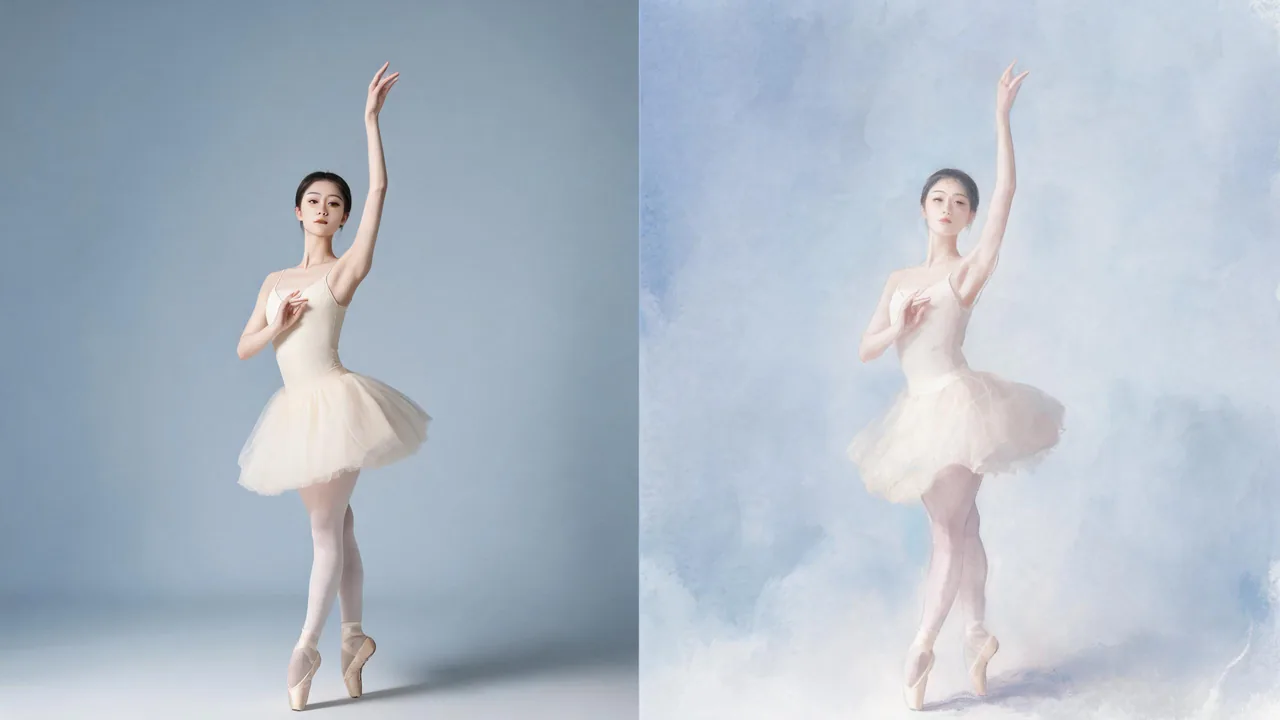
For "reference video vs style transfer", OpenFilmo gives you a browser-based AI video tool: supply your source, apply one defined change, preview, then download. Free credits let you test it without a card; paid plans start at $9.99/month. It is built for single-purpose tasks and quick iterations, not for frame-accurate timeline editing.
Ready to try it? Open the corresponding tool in the OpenFilmo app.
Open in OpenFilmoFree credits to start. OpenFilmo gives you free credits in the app to start. Paid options are Pro Monthly at $9.99 for 800 credits, Pro Yearly at $99 for 9,600 credits, and one-time Starter ($4.99 / 300 credits) and Value ($14.99 / 1,000 credits) packs that never expire.
Quick answer
For "reference video vs style transfer", OpenFilmo gives you a browser-based AI video tool: supply your source, apply one defined change, preview, then download. Free credits let you test it without a card; paid plans start at $9.99/month. It is built for single-purpose tasks and quick iterations, not for frame-accurate timeline editing.
What "Reference video vs style transfer" covers and when to use it
"reference video vs style transfer" is really a choice between two ways of working. One path optimises for control, the other for speed. Laying out what each path costs in time, in credits and in rework makes the decision much less subjective.
The control-first route gives you per-frame adjustment and precise timing, at the cost of setup time and a learning curve. The speed-first route gives you a result in a single pass, at the cost of fine-grained control. Most real projects sit between the two, so the honest answer is usually a threshold: use the fast path until the shot needs frame-level attention, then move only that shot into a manual editor.
Whichever path you choose, run one representative asset through it before committing a whole batch. A five-minute trial settles most "which is better" arguments with actual evidence from your own footage.
How it works, step by step
- Write down your constraints — List turnaround time, required control, budget and who will operate the workflow.
- Run the same sample twice — Process one representative asset through both approaches with the same source and the same acceptance criteria.
- Score the results — Compare quality, time spent, rework needed and cost. Use your own file, not a vendor demo.
- Check the edge cases — Try the hardest asset in your set. A method that only works on easy inputs will fail in production.
- Decide and document — Pick a default path and note the condition under which you switch to the other one.
| Parameter | What to expect |
|---|---|
| Task | Reference video vs style transfer |
| Domain | AI video |
| Input | A source clip or image, or a text description where supported |
| Output | A downloadable video or image file in the aspect ratio of the source |
| Where it runs | In the browser through the OpenFilmo app |
| Cost | Free credits to start; paid plans from $9.99/month |
How this compares with the alternatives
The honest way to judge "reference video vs style transfer" is to compare it with what you would otherwise do. None of these options is universally better; each trades one kind of cost for another.
| Approach | What it gives you | What it costs |
|---|---|---|
| Control-first path | Frame-accurate results | Setup time and skills needed |
| Speed-first path | One-pass output | Less fine control |
| Hybrid | Fast default, manual exceptions | Needs a clear switch rule |
| Status quo | No change to learn | Keeps the current bottleneck |
Where teams actually use this
These are the situations where this AI video task shows up most often in practice.
- Choosing a default workflow — Pick one path for most jobs and define the exception.
- Budget planning — Compare credit cost against staff time before committing.
- Tool evaluation — Score candidates on your own footage rather than demo reels.
- Process review — Revisit the decision when volume or quality requirements change.
Frequently asked questions
- What does "reference video vs style transfer" actually involve?
- It is the comparison side of a AI video task: you supply a source, the tool applies one defined change, and you get a downloadable file back. The scope is deliberately narrow so the result is predictable and repeatable.
- Do I need to install anything for reference video vs style transfer?
- No. The workflow runs in the browser through the OpenFilmo app. You need a source file and an account to access the tool; there is no desktop install and no project file to manage.
- Will reference video vs style transfer reduce the quality of my file?
- Any processing step can introduce artefacts if pushed too far. Use the narrowest setting that solves the problem, keep the original as a copy, and check the result at full size before exporting. A light single pass is safer than several heavy ones.
- How much does it cost to reference video vs style transfer?
- OpenFilmo gives you free credits in the app to start. Paid options are Pro Monthly at $9.99 for 800 credits, Pro Yearly at $99 for 9,600 credits, and one-time Starter ($4.99 / 300 credits) and Value ($14.99 / 1,000 credits) packs that never expire.
- Can I use the output commercially?
- Yes. Every render carries full commercial rights, including assets produced with the free starting credits. You are still responsible for making sure the source images, clips and prompts you upload do not infringe someone else's rights.
- When should I not use this approach?
- For frame-accurate multicam editing, complex colour matching across cameras, or a long-form programme that needs a locked grade, a dedicated timeline editor is the better finish. OpenFilmo is a creation workspace rather than a full replacement for an NLE.
Terms worth knowing
- Credits
- The shared balance used across video, image and audio tools. Different operations consume different amounts, shown before you confirm.
- Aspect ratio
- The proportional relationship between width and height, such as 16:9 for landscape or 9:16 for vertical feeds.
- Upscaling
- Increasing the dimensions of an asset while reconstructing detail, as opposed to simply stretching pixels.
- Inference
- The model run that produces the output from your input; it happens on a server rather than on your device for cloud tools.
- Artefact
- An unintended visual defect such as banding, halos, blur or flicker introduced during capture or processing.
Related tools and guides
These related AI video guides cover the neighbouring steps in the same workflow. Links here point to the actual pages, not to a navigation menu.